
How We Secured Planning Permission for a House Extension in St Albans
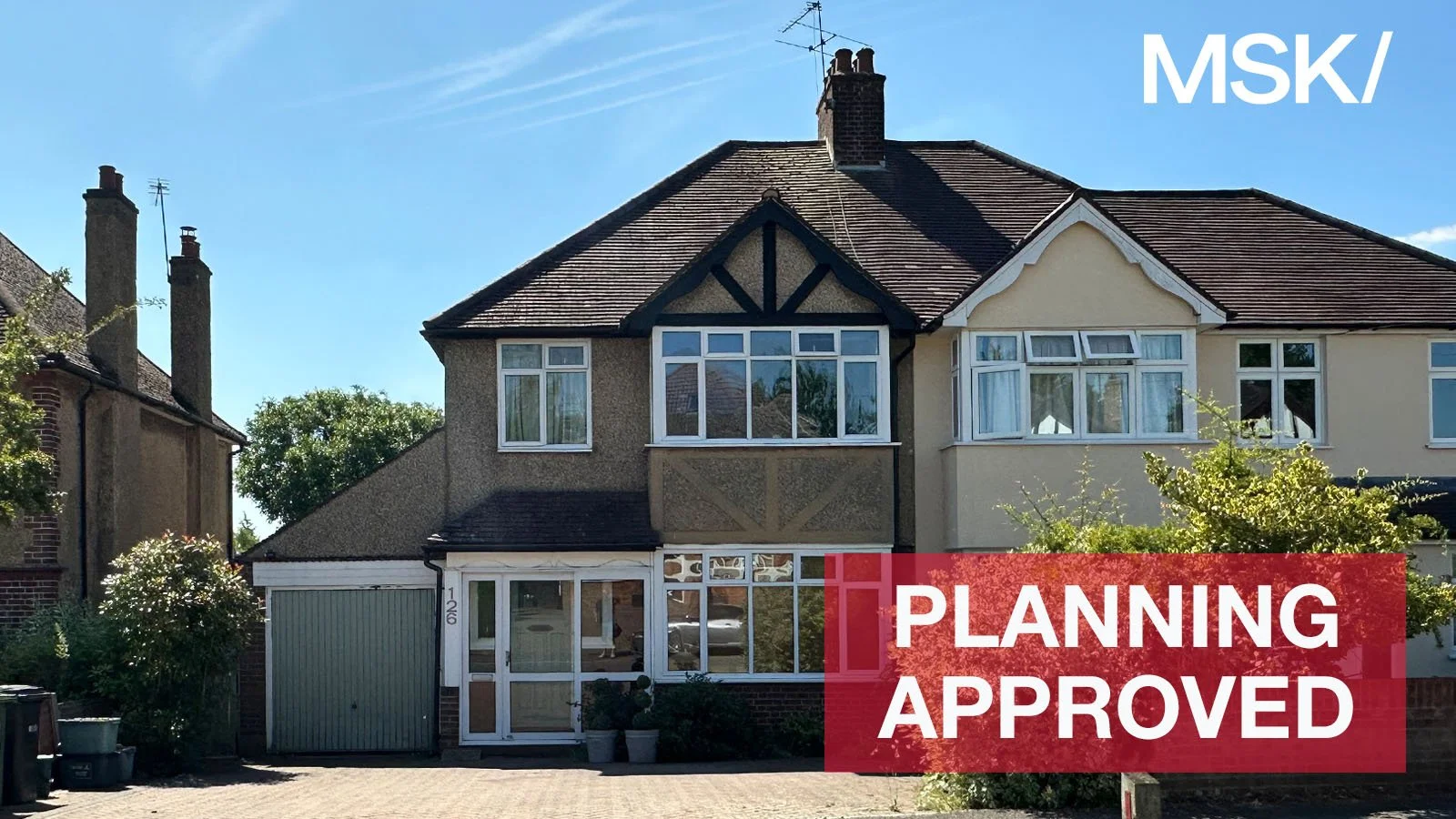
MSK Design Ltd secured planning permission from St Albans City and District Council for a single-storey side and rear extension, new front porch and raised rear terrace at 126 Green Lane, St Albans.
The approved scheme enhances an existing semi-detached dwelling, providing improved internal accommodation while respecting the character of the host property, neighbouring amenity and the surrounding residential street scene.
This project demonstrates how a carefully considered, planning-led design approach can help homeowners secure permission for residential extensions, even where matters such as design, neighbour impact, parking, daylight, outlook and raised terraces need to be carefully addressed.
What Was Proposed at 126 Green Lane, St Albans?
The approved development included:
A single-storey side extension
A single-storey rear extension
A new front porch
A modest raised rear terrace
External materials to match the existing dwelling
Retention of sufficient private amenity space
Retention of on-site parking provision
The aim of the project was to improve the functionality and usability of the home while ensuring the extension remained subordinate to the original property.
For house extension projects, this is often one of the most important planning considerations. Local planning authorities generally expect new additions to sit comfortably with the existing building and avoid appearing overly dominant or harmful to the wider street scene.
Planning Challenges for House Extensions in St Albans
Residential extensions can appear straightforward, but they are often assessed against several planning considerations.
For this scheme, the main planning issues included:
The scale and appearance of the side and rear extensions
The relationship between the new additions and the original dwelling
The use of a flat roof form
The effect on the character and appearance of Green Lane
Neighbouring privacy, outlook and daylight
The impact of the raised rear terrace
Retention of private garden space
Parking and highway safety
The planning strategy therefore focused on demonstrating that the proposal would enhance the property without causing harm to neighbouring occupiers, the host dwelling or the surrounding residential character.
Design and Character Considerations
The extension was carefully designed to remain visually compatible with the host dwelling and wider street scene.
Although the approved scheme includes flat-roofed elements, this approach was considered acceptable within the local context. The use of matching materials also helped ensure the new extensions would integrate with the existing building and maintain a cohesive appearance.
The design approach focused on:
Keeping the extension subordinate to the main dwelling
Maintaining a clear relationship with the existing house
Using materials to match the host property
Avoiding excessive visual bulk
Preserving the established residential character of Green Lane
This helped demonstrate that the extension would sit comfortably within its setting.
How the Scheme Addressed Neighbouring Amenity
Neighbouring amenity is often one of the most important planning considerations for householder extensions.
For this project, the proposal was assessed in relation to:
Loss of light
Loss of outlook
Overbearing impact
Privacy
Overlooking
Boundary relationships
The scale of the raised rear terrace
The scheme was found to avoid unacceptable harm to neighbouring properties. The extension did not exceed relevant depth or height thresholds along shared boundaries, and the Council confirmed that the proposal complied with relevant daylight and sunlight considerations.
No objections were received from neighbouring occupiers, which also supported the overall planning balance.
Planning Policy and Officer Assessment
The application was assessed by St Albans City and District Council against the St Albans District Local Plan Review 1994, relevant Supplementary Planning Guidance and the National Planning Policy Framework.
The Council concluded that the development was acceptable in principle and complied with relevant design and residential extension policies. The officer assessment also found that the scheme would not cause harmful impact to the street scene, neighbouring amenity or highway safety.
This planning outcome highlights the importance of preparing a well-considered design that directly responds to local planning policy and site-specific constraints.
Raised Rear Terraces and Planning Permission
Raised rear terraces can require careful planning justification because they may create concerns about overlooking, privacy or visual impact.
At 126 Green Lane, the raised rear terrace was modest in scale and found to be acceptable in amenity terms.
For homeowners considering a raised patio, terrace or external platform, the key planning considerations will usually include:
Height above existing ground level
Distance to neighbouring boundaries
Potential overlooking
Boundary screening
Relationship with neighbouring gardens
Overall scale and visual impact
Considering these matters early can reduce planning risk and help shape a more acceptable proposal.
Outcome and Decision
Planning permission was granted under delegated authority, subject to standard conditions relating to approved plans, materials and implementation.
The decision confirms that the proposal represented a well-considered residential extension that would enhance the existing home without causing unacceptable harm to neighbouring amenity, local character or highway safety.
Why Early Planning Advice Matters for House Extensions
A successful house extension usually depends on more than simply adding floor area.
Before submitting a planning application, it is important to consider:
Whether the proposal needs planning permission
Whether permitted development rights apply
Local planning policy and design guidance
The relationship with neighbouring properties
Daylight, outlook and privacy
Parking and access
Materials and appearance
Whether a raised terrace or platform may create overlooking concerns
At MSK Design Ltd, we review these matters at an early stage so that the proposal can be shaped around both the homeowner’s brief and the planning requirements of the local authority.
House Extension Architects in St Albans and Hertfordshire
MSK Design Ltd provides planning-led architectural design services for house extensions, residential alterations and planning applications across St Albans, Hertfordshire, Barnet and North London.
Our services include:
House extension design
Side and rear extensions
Planning applications
Planning strategy and feasibility
Technical design
Residential refurbishment
We work with homeowners to develop carefully considered proposals that balance design quality, planning policy, neighbouring amenity and long-term usability.
Frequently Asked Questions
Do I need planning permission for a house extension in St Albans?
Some house extensions may be possible under permitted development rights, but others require planning permission depending on the size, height, location, design and any site-specific restrictions.
Can I build a single-storey side and rear extension?
Yes, subject to planning permission or permitted development rules. The proposal must usually remain proportionate to the host dwelling and avoid unacceptable impact on neighbouring properties or the street scene.
Are flat-roof extensions acceptable in St Albans?
Flat-roof extensions can be acceptable where they are well designed, appropriate to the property and compatible with the local context. Materials, scale, visibility and relationship with the existing dwelling are important considerations.
Do raised rear terraces need planning permission?
Raised terraces, patios or platforms can require planning permission, especially where they may affect neighbouring privacy or create overlooking. Their height, position and boundary treatment should be considered carefully.
What does the Council consider when assessing house extensions?
The Council will typically consider design quality, scale, massing, materials, neighbouring amenity, privacy, outlook, daylight, parking, highway safety and the character of the surrounding area.
Planning a House Extension in St Albans or Hertfordshire?
If you are considering a side extension, rear extension, raised terrace or wider home refurbishment, early planning advice can help identify the best route forward.
MSK Design Ltd can assist with feasibility, architectural design, planning applications and technical design for residential projects across St Albans, Hertfordshire, Barnet and North London.
To discuss your project, contact MSK Design Ltd or explore our recent planning approvals and residential extension case studies.