
How We Secured Planning Permission and a Lawful Development Certificate for a Loft Conversion and Side Extension in Barnet
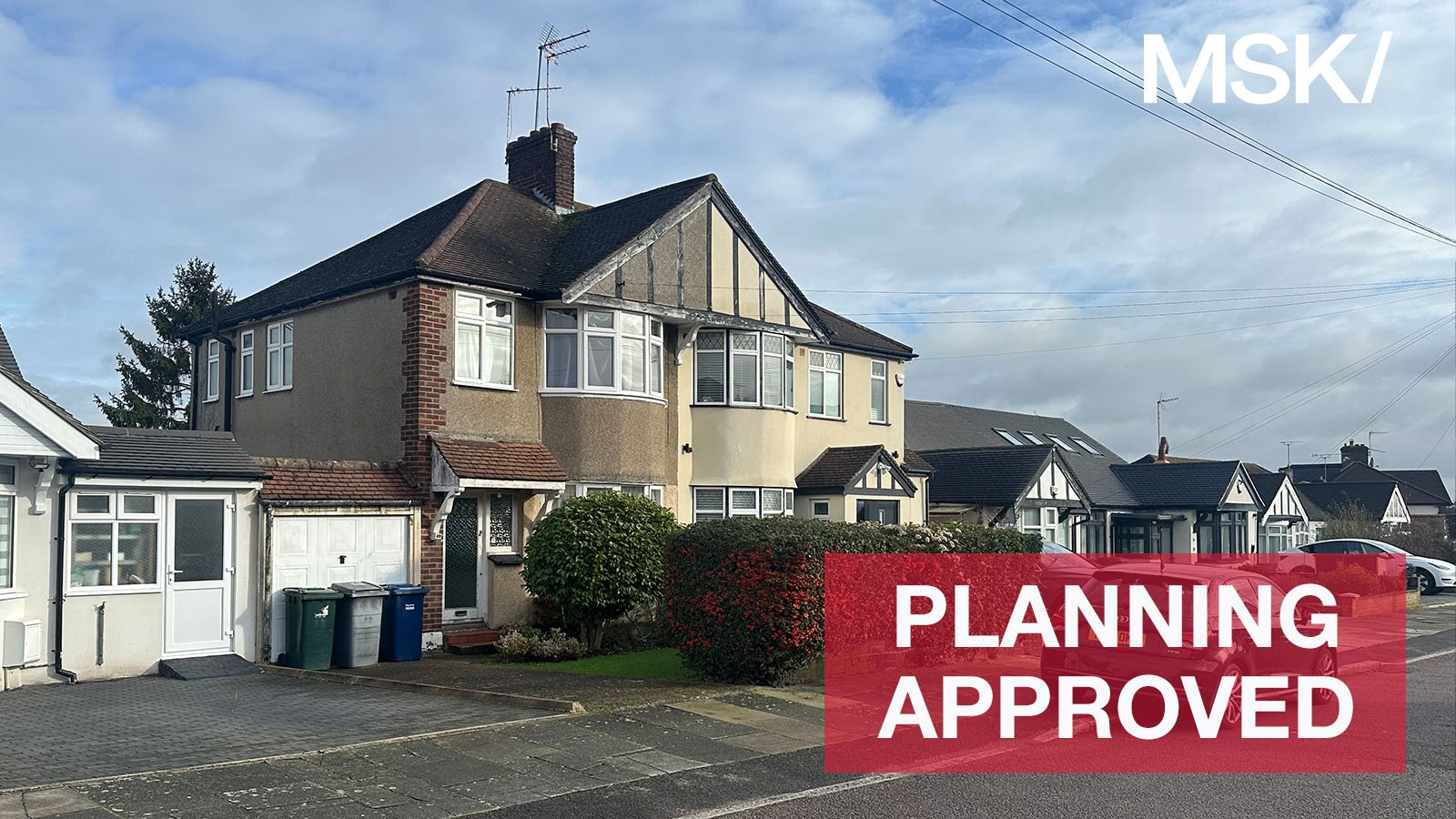
MSK Design Ltd secured two successful approvals at 42 Haslemere Avenue, Barnet, EN4, allowing the homeowner to proceed with a comprehensive programme of residential extensions.
The project required a carefully structured planning strategy because the works included both a loft conversion capable of being assessed under permitted development rights and a wider package of householder extensions requiring planning permission.
By separating the proposals into the correct planning routes, we secured approval first time for both applications, helping the client maximise the development potential of their home while reducing planning risk.
What Was Proposed at 42 Haslemere Avenue?
The client wanted to significantly improve and modernise the property by creating additional family accommodation across the ground, first and roof levels.
The overall scope included:
A full loft conversion
A hip-to-gable roof extension
A rear dormer
Front rooflights
A side gable window
A part single-storey and part two-storey side extension
A front extension with a new porch
A rear infill extension
Terrace improvements to the rear garden
Together, these works allowed the property to be substantially improved while still requiring a careful approach to planning policy, permitted development limitations and neighbouring amenity.
Why Two Separate Planning Routes Were Used
One of the most important aspects of this project was selecting the right planning route from the outset.
Rather than submitting one combined planning application for all of the works, the proposals were divided into two separate applications:
A Lawful Development Certificate for the loft conversion works under permitted development rights.
A Householder Planning Application for the front, rear and side extensions.
This strategy helped reduce planning risk because each part of the proposal was assessed under the most appropriate statutory route.
For many residential extension projects, identifying whether works should be submitted under permitted development, householder planning permission, or a combination of both can significantly affect the outcome.
Lawful Development Certificate for the Loft Conversion
The loft conversion was designed to comply with the requirements of the General Permitted Development Order.
The approved lawful development works included:
Hip-to-gable roof extension
Rear dormer
Front rooflight
Side gable window
Additional habitable accommodation within the roofspace
A key part of the assessment was ensuring that the roof enlargement remained within the permitted development volume allowance for a semi-detached dwelling.
For semi-detached properties, loft conversions can often fall within permitted development rights where the relevant limitations and conditions are satisfied. However, careful checking is still required because design details, roof volume, materials, window positions and previous extensions can all affect whether the works are lawful.
In this case, detailed volumetric testing was carried out to confirm that the loft extension remained within the relevant permitted development allowance. This allowed the client to secure formal confirmation of lawfulness before progressing with the works.
Householder Planning Permission for the Side, Front and Rear Extensions
The second application covered the elements of the project that required householder planning permission.
These included:
A single-storey front extension with a new porch
A single-storey rear infill extension
A part single-storey and part two-storey side extension
Associated terrace and external alterations
The design was developed to remain subordinate to the original dwelling and to respond appropriately to the surrounding residential context.
For two-storey side extensions in Barnet, key planning considerations often include:
Whether the extension appears subordinate to the host dwelling
The relationship with neighbouring properties
Impact on the street scene
Boundary relationships
Privacy and overlooking
Outlook and daylight
Scale, massing and roof form
Materials and architectural integration
The scheme was structured to demonstrate that the proposed extensions would improve the property without causing unacceptable harm to neighbouring amenity or the character of the area.
Planning Challenges for Loft Conversions and Side Extensions in Barnet
Although residential extension projects can appear straightforward, they often involve several overlapping planning considerations.
For this project, the main planning challenges included:
Maximising roofspace while remaining within permitted development limits
Calculating the proposed loft conversion volume accurately
Ensuring the rear dormer and hip-to-gable extension complied with the GPDO
Designing a two-storey side extension that remained proportionate
Maintaining the character and appearance of the existing property
Avoiding unacceptable impact on neighbouring amenity
Coordinating two applications to secure a complete development strategy
Ensuring the final design worked as one coherent scheme
The success of the project came from aligning the design brief with the correct planning route and ensuring that each element of the proposal could be properly justified.
Why Early Permitted Development Testing Matters
Permitted development rights can provide an effective route for loft conversions, but they are highly technical.
Before assuming that a loft conversion is permitted development, it is important to review:
The type of property
Whether permitted development rights remain intact
Whether the property is in a conservation area or subject to restrictions
Existing roof form
Previous roof extensions
Proposed cubic volume
Materials
Window positions
Eaves relationships
Whether any planning conditions affect the property
A Lawful Development Certificate provides formal confirmation from the council that the proposed works are lawful. This can be very useful for homeowners, contractors, lenders and future purchasers because it gives a clear planning record for the approved works.
At Haslemere Avenue, early volumetric testing helped confirm the appropriate route and avoid unnecessary planning risk.
Outcome: Two First-Time Approvals
Both applications were approved first time.
The combined approvals allow the homeowner to proceed with a comprehensive improvement of the property, including new loft accommodation, expanded family living space, an improved entrance, side extension works and rear garden connection.
The approved development provides:
Additional habitable accommodation at loft level
Improved family living space at ground and first floor
A more practical entrance arrangement
Improved relationship with the rear garden
Long-term enhancement of the property
A clear planning record for both permitted development and householder planning works
This outcome demonstrates the value of careful planning route selection and early-stage design strategy.
Why Planning Strategy Matters for Residential Extensions
For many house extension projects, the question is not simply whether planning permission is needed. The more important question is often which planning route gives the proposal the best chance of success.
A project may involve:
Permitted development rights
A Lawful Development Certificate
Householder planning permission
Prior approval
Full planning permission
Building Regulations approval
Party wall procedures
Choosing the wrong route can lead to delay, redesign or refusal. Choosing the correct route at the outset can help unlock the full potential of the property while keeping the process more efficient.
At MSK Design Ltd, we regularly advise homeowners on the most appropriate planning strategy for extensions, loft conversions and wider residential redevelopment projects.
Loft Conversion and Side Extension Architects in Barnet
MSK Design Ltd provides planning-led architectural design services for homeowners across Barnet, Enfield and North London.
Our residential extension services include:
Loft conversions
Hip-to-gable roof extensions
Rear dormers
Side extensions
Two-storey extensions
Front porch extensions
Rear infill extensions
Lawful Development Certificate applications
Householder planning applications
Building Regulations packages
Technical design coordination
We help clients establish the right planning route from the beginning, whether a project can proceed under permitted development rights, requires full planning permission, or needs a combined planning strategy.
Frequently Asked Questions
Do I need planning permission for a loft conversion in Barnet?
Some loft conversions can be carried out under permitted development rights, but this depends on the property type, roof volume, design, location and whether permitted development rights have been removed or restricted. A Lawful Development Certificate can provide formal confirmation that the works are lawful.
What is a Lawful Development Certificate?
A Lawful Development Certificate is a formal decision from the council confirming that proposed or existing works are lawful in planning terms. It is commonly used for loft conversions and extensions that are intended to fall within permitted development rights.
Can I combine permitted development and planning permission on the same project?
Yes. Some projects can be split into separate planning routes, with certain works submitted under permitted development and others submitted through a householder planning application. This can be an effective strategy where different parts of the scheme are assessed under different rules.
Are hip-to-gable loft conversions permitted development?
Hip-to-gable loft conversions can often be permitted development for certain houses, subject to volume limits, design restrictions and other GPDO conditions. The property’s planning history and location should always be checked before proceeding.
What does Barnet Council consider when assessing side extensions?
Barnet Council will typically consider scale, massing, design quality, materials, impact on the street scene, neighbouring amenity, privacy, outlook, daylight and whether the extension remains subordinate to the original dwelling.
Why use separate applications for one home extension project?
Separate applications can sometimes reduce planning risk by allowing different parts of the proposal to be assessed under the correct statutory route. This can be particularly useful where loft works may be lawful under permitted development but side, front or rear extensions require planning permission.
Planning a Loft Conversion or Side Extension in Barnet?
If you are considering a loft conversion, side extension, two-storey extension or wider home remodelling project in Barnet, early planning advice can help identify the most effective route.
MSK Design Ltd can help assess your property, test permitted development options, prepare planning applications and develop a coordinated architectural strategy for your home.
To discuss your project, contact MSK Design Ltd or explore our recent residential extension and loft conversion case studies.