
How MSK Design Secured a Lawful Existing Development Certificate for 5 Self-Contained Flats in Enfield
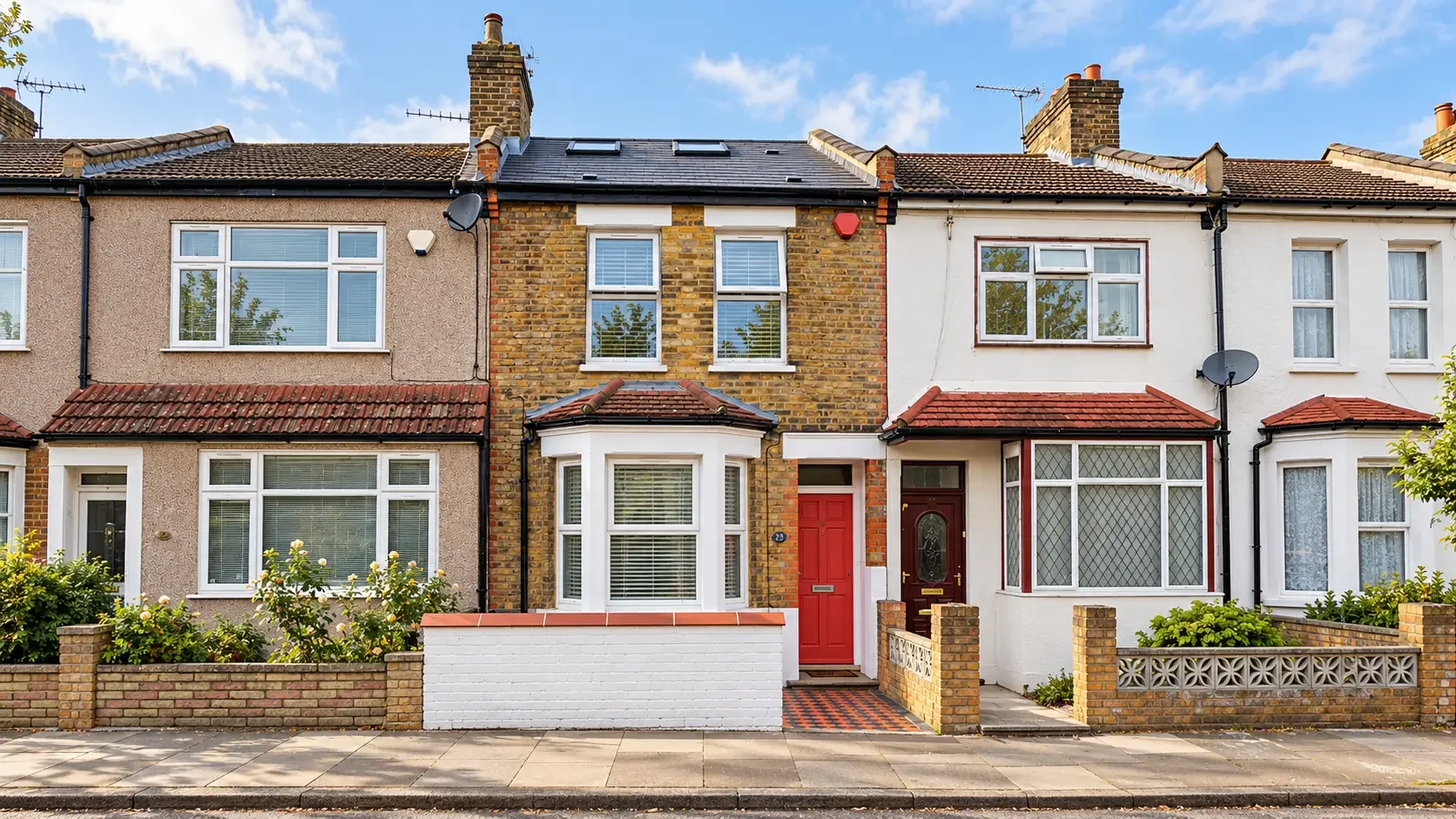
MSK Design has secured a Certificate of Lawful Existing Development for the established use of a property in Enfield as 5 self-contained flats.
The certificate was granted by Enfield Council under application reference 26/02486/CEU for 25 Seymour Road, London N9 0SE. The certificate confirms that the use of the property as 5 self-contained flats was lawful at the time of the application under Section 191 of the Town and Country Planning Act 1990.
This was not a conventional planning application where the council assesses the design merits of a new proposal. It was an evidence-led lawful development case. MSK Design had to review the property history, assemble supporting evidence, demonstrate the established use, and show that the evidence was sufficiently clear, precise and consistent to justify the grant of a certificate.
The result was a formal certificate confirming that the property had been in use as 5 self-contained flats for a continuous period of at least 4 years and was therefore considered lawful on the balance of probabilities.
Project Snapshot
Certificate of Lawful Existing Development for an established residential conversion in Enfield.
Site: 25 Seymour Road, London N9 0SE
Local authority: Enfield Council
Application reference: 26/02486/CEU
Decision date: 18 September 2026
Planning route: Certificate of Lawful Existing Development under Section 191
Established use: Single-family dwelling in use as 5 self-contained flats
MSK approach: Property history review, evidence gathering, planning statement, statutory declarations and supporting documentation
Outcome: Certificate granted confirming the use as lawful
Key Takeaways
This case shows that a lawful development certificate depends on evidence, not design preference.
The local planning authority does not reassess whether the use would be approved today as a new planning application. It considers whether the evidence demonstrates that the use is lawful.
For property owners facing enforcement questions, sale delays, refinance concerns or uncertainty over an established use, a carefully prepared certificate application can provide formal planning certainty.
Why this type of application is different
A Certificate of Lawful Existing Development is different from a standard planning application.
In a normal planning application, the council considers whether a proposed development is acceptable in planning terms. That can include design, amenity, parking, outlook, character, policy compliance and other planning considerations.
A lawful development certificate is different. It is based on legal facts and evidence.
In this case, the key question was whether the use of the building as 5 self-contained flats had become lawful through the passage of time. The delegated report explains that Section 191 of the Town and Country Planning Act 1990 allows an application to be made to the local planning authority for a certificate of lawfulness in respect of an existing use or development.
That meant the strength of the application depended on the quality, consistency and reliability of the evidence.
The planning challenge
The property had a complex planning history.
The delegated report records previous planning history including an enforcement case relating to an alleged property split into 5 flats, a certificate application for extensions and dormers, a later application for change of use from a single-family dwelling to a House in Multiple Occupation for up to 5 persons, and a subsequent condition discharge relating to cycle parking.
This history made the case more sensitive. The application needed to clearly demonstrate the actual established use of the property, rather than simply rely on assumptions about how the building had been occupied.
The issue was not whether a new conversion should be approved. The issue was whether the evidence showed that the use as self-contained flats had existed continuously for the required period.
MSK Design’s evidence-led strategy
MSK Design’s role was to build a clear and credible evidence case.
The delegated report records that the evidence submitted included:
location plan;
existing floor plan;
planning statement;
statutory declarations by tenants;
declaration by an estate agent;
email trails and invoices referring to 5 flats from 2021;
renewal of tenancy invitation letters referring to 5 flats;
bank statements showing rental payments from tenants between 2021 and 2025;
landlord property statements from the managing company;
tenancy agreements dating from 2021 to 2025.
This is the type of evidence-led planning work that is often required where a property owner needs to regularise or confirm an existing use.
The application did not rely on one single document. It relied on a coordinated evidence package that demonstrated the history, use, occupation and layout of the property over time.
Demonstrating the established use
The council’s report confirms that the submitted evidence covered the period from 2021 to 2025 and showed continuous use of the property as self-contained flats. It also records that some tenants were met during a site visit and confirmed that the flats had been present since 2021.
The council also noted that the units were self-contained and that there was no communal kitchen at the property.
This was an important point. For a lawful development certificate, the physical arrangement of the property and the way it has actually been used both matter. The evidence had to support the conclusion that the building was not simply being used as a shared house or informal arrangement, but as self-contained residential units.
The importance of the balance of probabilities test
Lawful development certificate applications are assessed on the balance of probabilities.
The delegated report refers to national planning guidance, explaining that where the local planning authority has no evidence of its own, and no evidence from others, to contradict the applicant’s version of events or make it less than probable, there is no good reason to refuse the application provided the applicant’s evidence is sufficiently precise and unambiguous.
This is why careful evidence preparation is so important.
A weak or incomplete application can fail even where the use may have existed for years. The evidence must be organised, credible and capable of demonstrating the relevant facts.
Responding to enforcement and objection risk
This type of case is often important where a property owner is facing uncertainty, enforcement interest or questions about whether the existing use is lawful.
The delegated report confirms that an objection was received, raising concerns about the property being converted, the number of units, parking, sewers and overdevelopment. However, the report also explains that a certificate of lawfulness is based on legal facts about the lawfulness of the use or development, and that planning merits or amenity impacts do not form part of that assessment.
This distinction is critical.
For a lawful development certificate, the central issue is not whether neighbours support the use, or whether the council would approve the use today as a fresh planning application. The issue is whether the use has become lawful based on the relevant legal test and evidence.
Why the certificate was granted
Enfield Council concluded that sufficient evidence had been provided to show that the use had been in situ and used as 5 self-contained flats continuously for a period of 4 years before the application was submitted.
The council also stated that it had no contradictory information to suggest that the facts presented were inaccurate, and no contradictory evidence had been provided to suggest otherwise.
The certificate confirms that the local planning authority was satisfied that, on the balance of probabilities, the property had been in use as 5 self-contained flats for a continuous period of at least 4 years. It therefore issued a Certificate of Lawful Existing Development.
What property owners can learn from this case
This case shows that established property uses need careful handling.
Property owners may need a lawful development certificate where:
a property has been converted or used in a particular way for several years;
the council has raised questions about the use;
enforcement concerns have been raised;
a sale, refinance or valuation requires clarity;
there is uncertainty over whether the existing use is lawful;
the planning history is complicated;
the property has been occupied in a way that needs to be evidenced.
A lawful development certificate is not simply a formality. It requires a structured case supported by evidence.
That evidence may include tenancy records, statutory declarations, utility records, council tax records, bank statements, invoices, property management records, floor plans, historic correspondence and other documentation showing the nature and continuity of the use.
How MSK Design helps with lawful development and enforcement-related cases
MSK Design can help homeowners, landlords, property owners and developers where the planning status of an existing use or development needs to be established.
Our role may include:
reviewing the planning history of the property;
identifying the correct planning route;
assessing whether a lawful development certificate may be appropriate;
reviewing the relevant time period and evidence requirements;
preparing existing plans and supporting documents;
coordinating statutory declarations and supporting evidence;
preparing planning statements;
responding to council questions;
supporting clients where there is enforcement interest or uncertainty.
At Seymour Road, this approach resulted in Enfield Council granting a Certificate of Lawful Existing Development for the use of the property as 5 self-contained flats.
Frequently asked questions
What is a Certificate of Lawful Existing Development?
A Certificate of Lawful Existing Development is a formal decision from the local planning authority confirming that an existing use, operation or development is lawful for planning purposes.
When might I need a lawful development certificate?
You may need a lawful development certificate if the planning status of an existing use or building work is unclear, if the council has raised enforcement concerns, or if you need certainty for a sale, refinance, valuation or future planning application.
What evidence is needed for a lawful development certificate?
Evidence may include tenancy agreements, statutory declarations, council tax records, utility bills, bank statements, invoices, historic correspondence, photographs, floor plans and other documents showing the nature and continuity of the use.
Is a lawful development certificate the same as planning permission?
No. Planning permission considers whether a proposal is acceptable in planning terms. A lawful development certificate considers whether an existing or proposed use or development is lawful based on planning law and evidence.
Can MSK Design help if the council is investigating an existing use?
Yes. MSK Design can review the planning history, assess the available evidence and advise whether a lawful development certificate, retrospective planning application or another planning route may be appropriate.
Need to prove an existing use is lawful?
If you own a property that has been converted, extended or used in a way that may require planning clarity, it is important to get specialist advice before responding to the council or submitting an application.
MSK Design can review the planning history, advise on the correct route and prepare a robust evidence-led submission where a lawful development certificate may be available.
Speak to MSK Design about lawful development certificates, retrospective planning and enforcement-related planning matters.