
How We Secured Planning Permission for a High-End Residential Extension in Cambridge
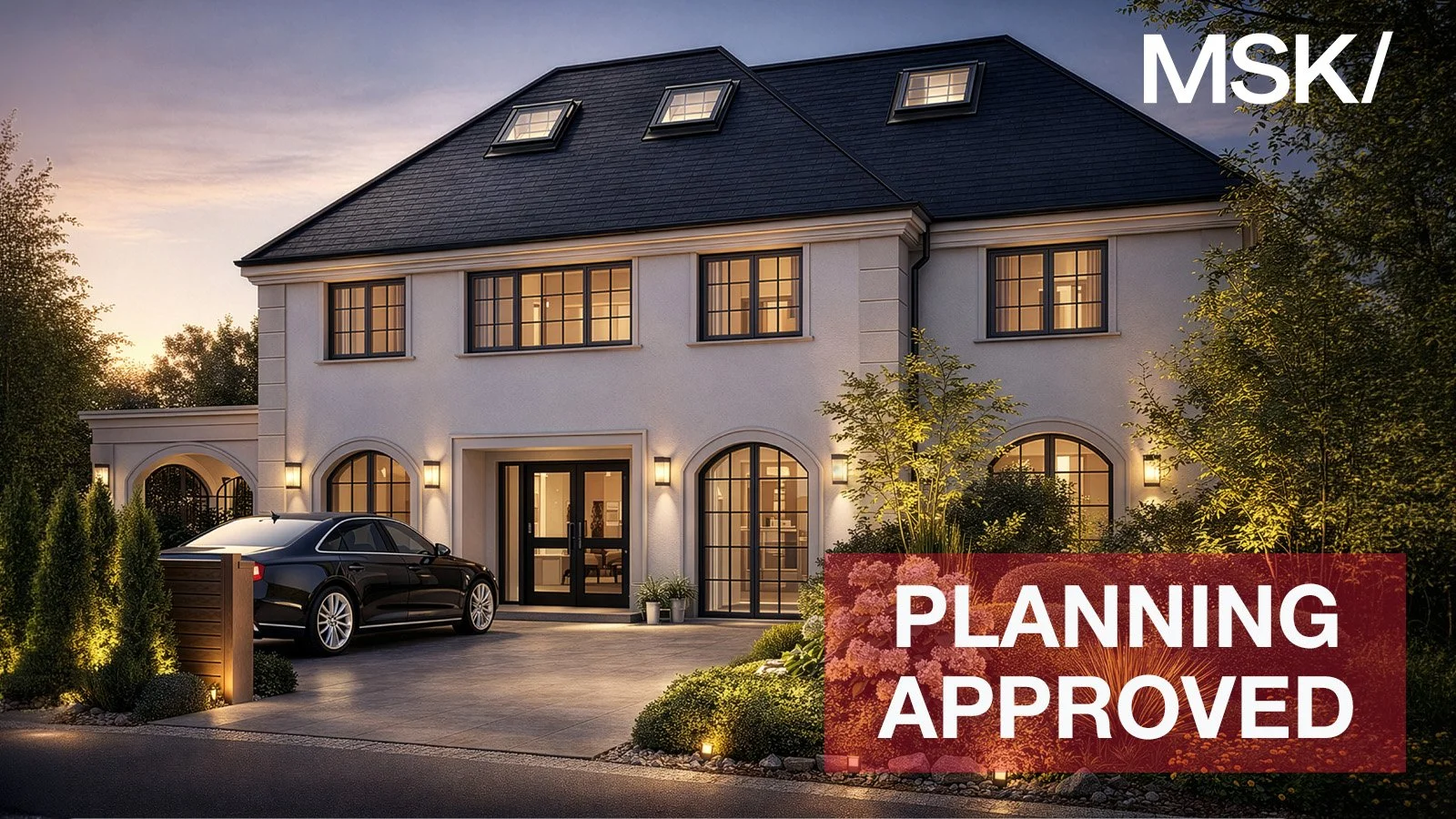
MSK Design Ltd secured planning permission from Cambridge City Council for a high-end residential extension and remodelling project in Cambridge.
The approved scheme allows the existing dwelling to be significantly improved through a combination of front, side and rear extensions, roof alterations, new rooflights and a coordinated redesign of the external appearance.
Rather than approaching the project as a simple house extension, the design strategy looked at the property as a whole. The aim was to create a more refined family home with improved internal space, stronger architectural balance and a high-quality contemporary finish, while responding carefully to the character of the surrounding area.
Planning permission was granted under reference 25/01208/HFUL.
What Was Proposed?
The approved development includes a comprehensive package of alterations and extensions to the existing house.
The works include:
part single-storey and part two-storey extensions to the front, side and rear;
roof alterations and reconfiguration;
new rooflights;
a redesigned front elevation;
a contemporary rear extension;
improved internal family living spaces;
a coordinated external materials strategy;
a more balanced and refined architectural appearance.
The proposal was designed to improve both the function and appearance of the property. Internally, the scheme creates more generous family accommodation. Externally, the design gives the house a clearer architectural identity and a more coherent relationship between the original dwelling and the new extensions.
Why the Planning Strategy Was Important
Larger residential extensions can be sensitive in planning terms, particularly where a proposal affects several parts of the building at once.
For this project, the planning strategy needed to address:
the scale and massing of the extensions;
the relationship between the proposed additions and the original house;
the appearance of the front elevation;
the impact of the side and rear extensions;
the reconfigured roof form;
neighbouring privacy and amenity;
the character of the surrounding area;
Cambridge City Council’s planning policies and design expectations.
A key part of the planning approach was establishing a clear design rationale from the outset. This helped demonstrate that the proposal was not simply an enlargement of the property, but a considered architectural remodelling of the home.
The application was supported by a planning-led design strategy, allowing the scheme to be assessed as a high-quality residential improvement rather than an excessive or poorly coordinated extension.
Establishing a Permitted Development Fallback Position
An important part of the strategy was the permitted development fallback position.
A fallback position can be relevant where parts of a proposed scheme could otherwise be delivered under permitted development rights or through a separate lawful planning route. In planning terms, this can help the local authority understand what could realistically be carried out without the same level of control as a full planning application.
For this project, establishing the fallback position early helped strengthen the overall planning case.
It allowed us to demonstrate that elements of the proposed development were grounded in a realistic planning context, while still allowing the final design to be refined into a more cohesive and higher-quality architectural solution.
This was particularly important because the final scheme was more ambitious than a basic permitted development extension. By understanding the fallback position first, we were able to pursue a high-quality design approach while maintaining a strong planning position.
Design Approach
The design approach focused on creating a balanced, elegant and contemporary family home.
The existing property had potential for improvement, but the extensions needed to be carefully composed so that the finished building would feel intentional and well-proportioned.
The design strategy included:
improving the symmetry and balance of the front elevation;
ensuring the side extension remained subordinate to the main house;
using a refined material palette;
coordinating the roof alterations with the wider design;
creating a stronger connection between the internal living spaces and garden;
introducing contemporary detailing without overwhelming the original building.
The result is a design that combines traditional residential proportions with a more modern architectural language.
This balance was important. A high-end residential extension should not only add floor area; it should improve the quality, appearance and long-term value of the home.
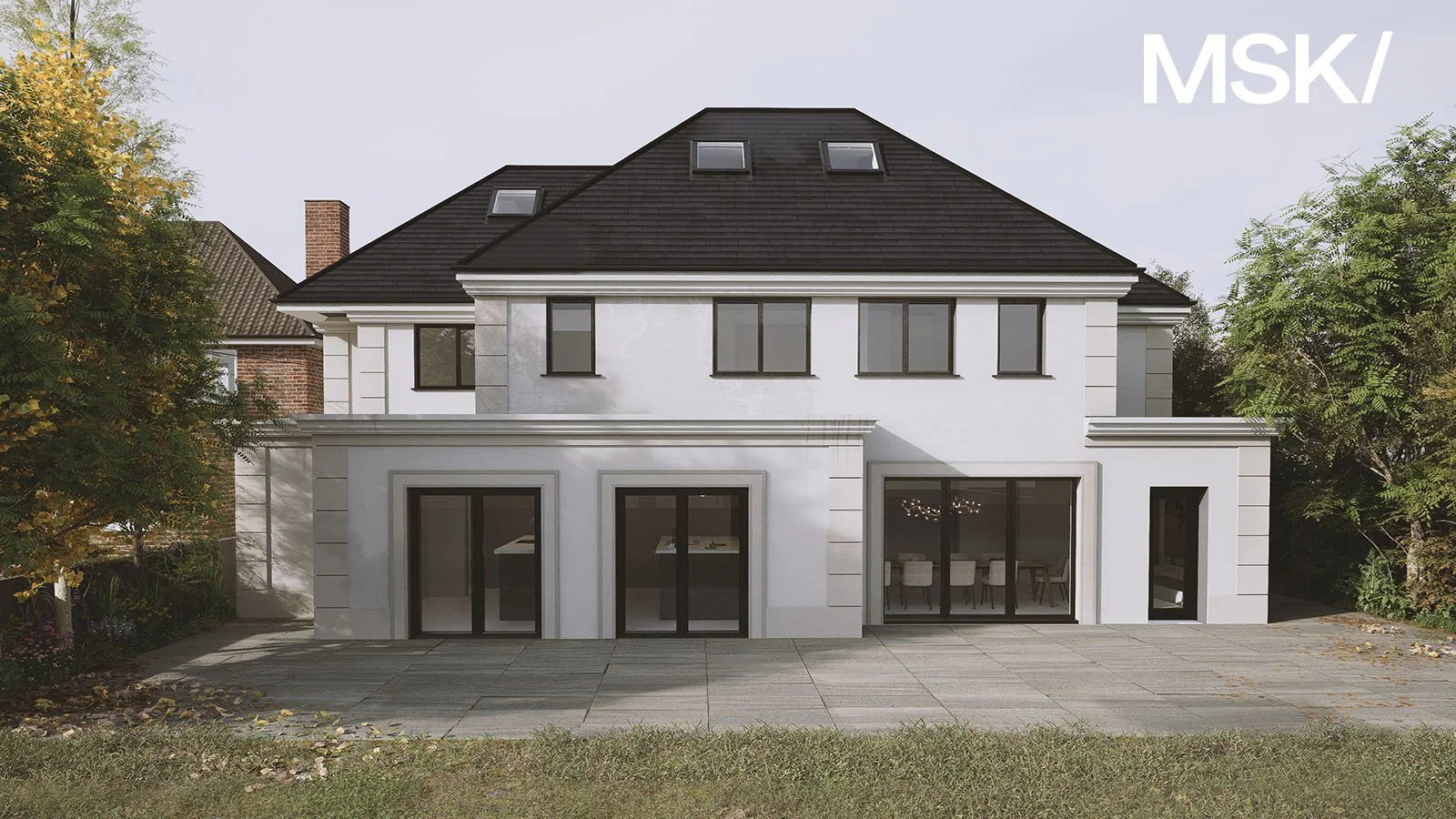
Proposed rear elevation
Responding to the Existing House and Streetscene
One of the main planning considerations was how the altered property would sit within the surrounding streetscene.
The proposal needed to improve the appearance of the house while remaining appropriate to the character of the area.
The design responded to this by:
avoiding an overly dominant extension form;
maintaining a clear relationship with the original dwelling;
using materials that complement the existing property;
breaking down the scale of the additions;
ensuring the roof alterations formed part of a coherent overall composition;
improving the visual quality of the front elevation.
This helped demonstrate that the scheme would enhance the property without causing harm to the wider character of the street.
Managing Scale, Massing and Visual Impact
The scale of a larger house extension is often one of the most important planning issues.
If an extension appears too bulky, dominant or poorly related to the host building, it can be difficult to support. For this project, the design was developed to ensure that the additional built form remained proportionate and carefully integrated.
The approach included:
stepping and articulating the extensions where appropriate;
avoiding unnecessary visual bulk;
balancing the front, side and rear elements;
using the roof design to tie the proposal together;
ensuring the final appearance read as a coordinated home rather than a collection of separate additions.
This helped the proposal present as a considered architectural remodelling rather than an overdevelopment of the site.
Protecting Neighbouring Amenity
Neighbouring amenity was another key consideration.
For larger residential extensions, the council will usually assess whether the proposal could cause harm through:
loss of light;
loss of outlook;
overlooking;
loss of privacy;
overbearing impact;
visual dominance;
increased sense of enclosure.
The design was carefully developed to avoid unacceptable impacts on neighbouring properties.
Window positions, roof form, extension depth and the relationship with adjoining homes were all considered as part of the planning strategy. This helped demonstrate that the scheme could deliver a substantial improvement to the property while protecting the amenity of neighbouring occupiers.
Planning Policy Compliance
The application was prepared to demonstrate compliance with relevant Cambridge planning policies relating to design quality, residential amenity and character.
The planning case focused on showing that the proposal would:
deliver a high-quality design;
improve the appearance and function of the existing home;
respond appropriately to the surrounding context;
avoid unacceptable neighbour impacts;
maintain a suitable relationship with the streetscene;
use an appropriate material and architectural strategy;
provide a coherent and proportionate extension to the dwelling.
This clear planning justification helped support the application and contributed to the successful approval.
Planning Outcome
Planning permission was granted by Cambridge City Council for the proposed extensions, roof alterations and external redesign.
The approval allows the existing property to be transformed into a more spacious, refined and contemporary family home.
The project demonstrates the importance of combining architectural ambition with a clear planning strategy. By reviewing the planning position early, establishing a fallback position and carefully coordinating the design, we were able to secure approval for a substantial residential improvement.
Our Role
MSK Design Ltd provided architectural and planning support for the project from concept through to planning approval.
Our role included:
reviewing the planning potential of the property;
assessing the permitted development fallback position;
developing the architectural design;
preparing the householder planning application;
coordinating the planning drawings;
responding to planning considerations;
refining the design strategy to support approval.
The project was overseen by Michael Koutra and led by Architect Monica Theo, combining planning strategy, architectural design and local authority engagement to secure a successful outcome.
Why Early Planning Advice Matters
High-end residential extension projects often involve more than simply preparing drawings.
Before submitting a planning application, it is important to understand:
what can be achieved under permitted development;
whether a full planning application is required;
how the council is likely to assess the proposal;
whether the design may affect neighbouring amenity;
how the extension will relate to the original house;
whether the scale and massing are appropriate;
how materials and detailing will influence the planning assessment.
Early planning advice helps identify risks before the design is finalised. It also allows the proposal to be shaped around both the client’s aspirations and the local authority’s planning requirements.
For this project, early strategy helped create a stronger and more coherent planning submission.
High-End Residential Extension Architects
MSK Design Ltd provides planning-led architectural services for residential extensions, full home remodelling projects and high-end private residential schemes.
Our services include:
house extension design;
full home remodelling;
planning strategy;
permitted development reviews;
lawful development certificates;
householder planning applications;
design and access statements;
Building Regulations drawings;
technical design packages;
We help homeowners understand what is achievable, what planning risks need to be addressed and how to develop a design that improves both the appearance and function of their home.
Frequently Asked Questions
Do I need planning permission for a large house extension in Cambridge?
Many larger house extensions require planning permission, particularly where the works involve front extensions, two-storey additions, significant roof alterations or changes that do not fall within permitted development rights. The planning route will depend on the property, the scale of the proposal and any site-specific restrictions.
Can permitted development help support a planning application?
Yes. A permitted development fallback position can sometimes support a planning application by showing what could be built lawfully without full planning permission. This can be a material consideration where the proposed design offers a better or more coordinated solution than the fallback scheme.
What does Cambridge City Council consider when assessing house extensions?
Cambridge City Council will typically consider design quality, scale, massing, materials, impact on the existing dwelling, streetscene character, neighbouring amenity, privacy, daylight, outlook and compliance with local planning policy.
Can a contemporary extension be approved on a traditional house?
Yes. Contemporary extensions can be approved where the design responds sensitively to the existing building, uses appropriate materials and does not harm the character of the property or surrounding area. The key is to create a design that is clearly considered rather than visually competing with the original house.
Why is design quality important for high-end residential extensions?
Design quality is important because larger extensions can significantly change the appearance, function and value of a home. A well-designed scheme should improve internal space while respecting the original building, neighbouring properties and wider setting.
Should I get planning advice before designing a major home extension?
Yes. Early planning advice can help identify site constraints, permitted development options, policy risks and design opportunities before detailed drawings are prepared. This can reduce the risk of delay, redesign or refusal during the planning process.
Planning a High-End Residential Extension?
If you are considering a substantial house extension, full home remodel or high-end residential project, early planning advice can help establish the right strategy from the outset.
MSK Design Ltd can assist with feasibility, architectural design, planning applications and technical design for residential extension projects.
To discuss your project, contact MSK Design Ltd or explore our recent residential planning case studies.