
How We Secured Planning Permission for an Airspace Development in Hendon, Barnet
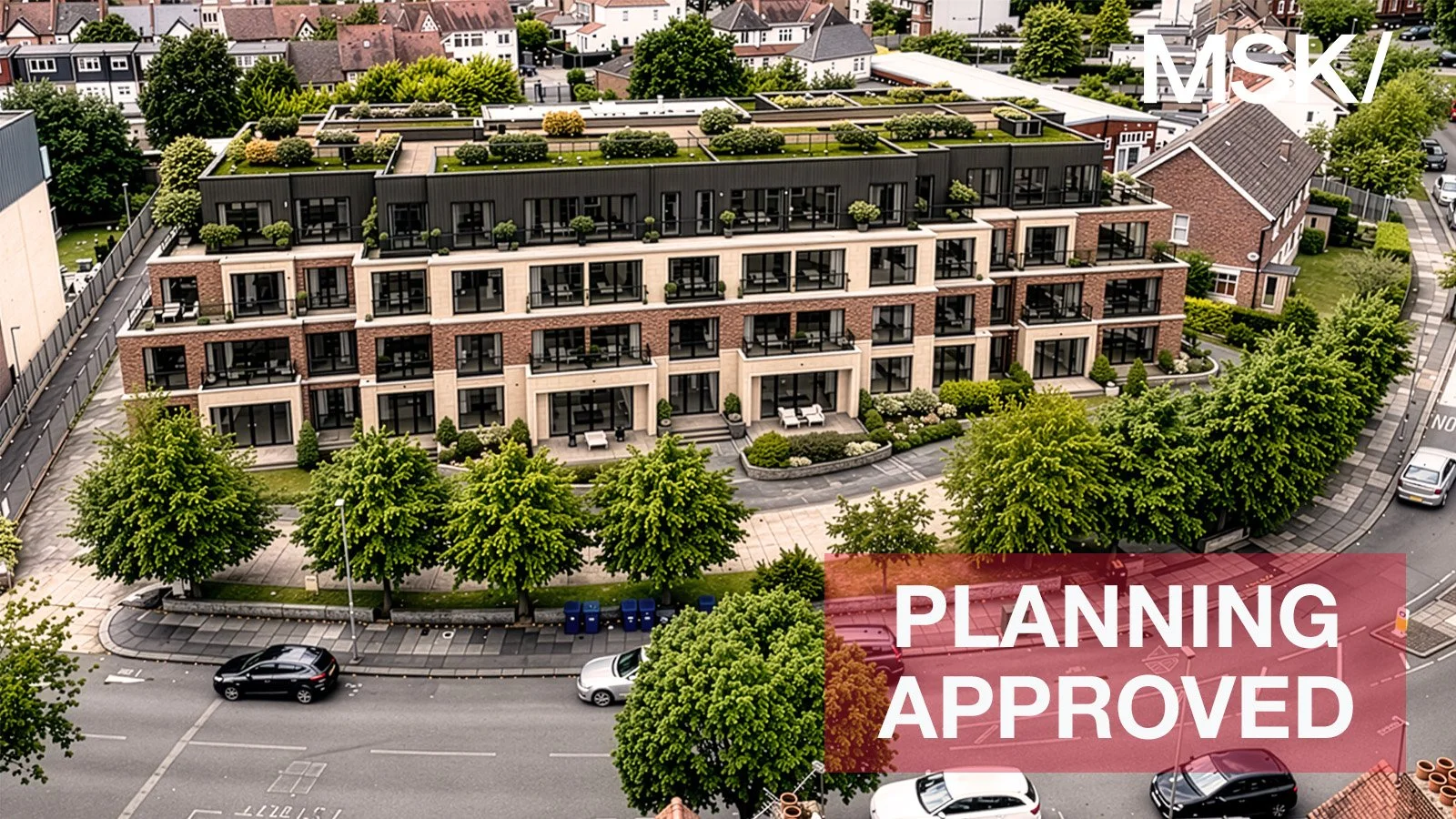
MSK Design Ltd secured planning permission from the London Borough of Barnet for a significant airspace development at Whiteways, Hillview Gardens, Hendon, NW4, delivering 9 new homes through the addition of two new storeys above an existing residential building.
The approved scheme involved the removal of the existing roof, the construction of two additional storeys, the creation of 9 self-contained residential units and a side extension to provide a compliant access core.
The application was approved at planning committee under reference 24/3025/FUL, following detailed scrutiny of design, height, massing, amenity, parking, sustainability and housing quality.
This case study explains how a planning-led design strategy helped unlock the airspace potential of an existing residential block in Hendon.
What Is an Airspace Development?
An airspace development involves creating new accommodation above an existing building, usually through a rooftop extension, additional storeys or upward extension.
In London, airspace development can be an effective way to deliver new homes without demolishing an existing building or developing new land. It can be particularly valuable where a site already has a suitable structure, access, parking capacity and a surrounding context that can accommodate additional height.
However, airspace developments are often complex because they need to balance housing delivery with design quality, neighbouring amenity, structural feasibility, fire safety, access, parking, servicing and sustainability.
At Whiteways, the opportunity was to make better use of an existing residential building while responding carefully to the surrounding townscape and residential context.
What Was Proposed at Whiteways, Hillview Gardens?
The approved proposal included:
removal of the existing roof;
construction of two additional storeys;
creation of 9 self-contained residential units;
a side extension to provide a compliant access core;
private amenity terraces;
green roof provision;
cycle and parking provision;
sustainability and biodiversity enhancements.
The new homes include a mix of unit types, including 1-bedroom, 2-bedroom, 3-bedroom and studio accommodation.
This mix helped demonstrate that the scheme would contribute to both local and London-wide housing objectives, while making efficient use of an existing residential site in Barnet.
Why the Site Was Suitable for Airspace Development
The existing building is a two-storey residential block with a modest pitched roof. The site occupies a prominent position in Hendon and sits within a varied townscape, including lower-rise residential buildings and larger-scale nearby developments.
This surrounding context was important. Airspace developments are rarely assessed in isolation. The planning authority will usually consider:
the height of neighbouring buildings;
the scale and massing of nearby development;
the rhythm and character of the street;
changes in ground levels;
views from public and private spaces;
the relationship with adjoining residential properties;
whether the site is affected by conservation or heritage constraints.
In this case, the site was not constrained by conservation or heritage designations, which allowed a more flexible design response.
The presence of nearby larger-scale buildings also helped support the principle of additional height, provided that the final design remained proportionate and well integrated.
Design Strategy: Adding Two Storeys Without Overwhelming the Existing Building
A key planning challenge was ensuring that the two additional storeys did not appear excessive or visually dominant.
The design strategy focused on creating a clear but balanced upward extension that would sit comfortably above the existing building and respond to the surrounding context.
The proposal was developed to:
align with the prevailing height of nearby buildings;
respond to changes in ground level;
improve the architectural quality of the existing block;
avoid a bulky or overbearing roof form;
maintain a coherent street presence;
provide high-quality new homes with private amenity space.
This approach helped demonstrate that the development was not simply adding height for maximum floor area, but creating a considered architectural response to the site.
Planning Challenges for Airspace Developments in Barnet
Airspace developments often attract detailed planning scrutiny, particularly where they involve additional storeys above existing residential buildings.
For this project, the main planning issues included:
height and massing;
townscape impact;
daylight and outlook;
neighbouring amenity;
privacy and overlooking;
parking and servicing;
construction impacts;
access and fire safety;
housing mix and internal space standards;
sustainability and biodiversity;
committee presentation and justification.
The application attracted objections, including concerns about daylight, outlook, height, parking and construction impacts. The planning strategy therefore needed to provide clear evidence that the scheme would be acceptable in planning terms.
Addressing Neighbouring Amenity
Neighbouring amenity is one of the most important issues for rooftop and airspace developments.
When additional storeys are added to an existing building, the council will carefully consider whether the proposal would cause unacceptable harm through:
loss of light;
loss of outlook;
overlooking;
sense of enclosure;
increased visual dominance;
additional activity or noise.
For this scheme, the design and supporting planning case demonstrated compliance with relevant daylight, outlook and amenity standards.
The additional height was assessed in the context of the surrounding building pattern, and the layout was developed to provide high-quality accommodation without creating unacceptable impacts on neighbouring properties.
Parking, Access and Servicing Strategy
Parking can become a key issue for residential intensification projects, particularly where new homes are added to an existing block.
For Whiteways, the planning strategy needed to demonstrate that the additional homes could be accommodated without creating unacceptable parking or servicing pressure.
The approved scheme addressed this through:
evidence of underused existing parking capacity on site;
cycle provision;
electric vehicle charging infrastructure;
a clear servicing strategy;
a compliant access core provided through the side extension.
This helped support the planning case and showed that the development could operate effectively once occupied.
Housing Quality and Private Amenity Space
The approved development delivers a range of new homes, including smaller units and family accommodation.
Each home was designed to meet relevant residential space standards and to provide private amenity space in the form of terraces.
This was important because airspace developments need to demonstrate that they are not only delivering additional housing numbers, but also creating high-quality homes for future residents.
The residential quality case therefore focused on:
internal space standards;
unit mix;
outlook;
natural light;
private amenity space;
access;
cycle storage;
long-term usability.
Sustainability and Biodiversity Measures
The scheme includes a range of sustainability and ecological enhancements, including:
green roof provision;
bat boxes;
bird bricks;
insect habitats;
electric vehicle charging infrastructure;
water efficiency measures;
carbon reduction measures.
These elements helped align the development with London Plan and Barnet Local Plan sustainability objectives.
For airspace projects, sustainability is not just an add-on. It can be an important part of the planning balance, particularly where the proposal is delivering new homes through the reuse and intensification of an existing building.
Planning Committee Approval
The application was presented to planning committee and approved following detailed scrutiny.
Committee approval was an important milestone because larger or more sensitive residential intensification schemes often require a clear, well-evidenced planning case.
For this project, the planning strategy focused on explaining:
why the site was suitable for additional height;
how the design responded to the surrounding context;
why neighbouring amenity would remain acceptable;
how parking and servicing would be managed;
how the proposal contributed to housing delivery;
why the benefits of the scheme outweighed perceived impacts.
Planning permission was formally granted by the London Borough of Barnet under reference 24/3025/FUL.
Why Airspace Development Matters in Barnet
Airspace development can play an important role in delivering new homes across Barnet and North London.
Many existing residential and mixed-use buildings have underused roof space, particularly where the original building form is modest and the surrounding context can accommodate additional height.
However, successful airspace development depends on more than identifying available roof space. It requires a coordinated assessment of:
planning policy;
townscape context;
structural feasibility;
fire safety and access;
internal layouts;
residential quality;
neighbour impact;
daylight and sunlight;
parking and servicing;
sustainability;
committee risk.
At Whiteways, the project shows how a carefully prepared planning application can unlock additional housing without requiring full demolition or redevelopment of the site.
Our Role
MSK Design Ltd led the project from initial feasibility through to planning approval.
Our role included:
feasibility and development strategy;
planning strategy;
pre-application engagement;
architectural design;
planning application preparation;
consultant coordination;
response to planning issues;
committee strategy and support.
The scheme demonstrates how planning-led architectural design can help clients identify and unlock development potential on constrained residential sites.
Airspace Development Architects in Barnet and North London
MSK Design Ltd provides planning-led architectural services for airspace developments, rooftop extensions, residential intensification and mixed-use development across Barnet, Hendon and North London.
Our services include:
airspace development feasibility;
rooftop extension design;
planning strategy;
pre-application advice;
planning applications;
residential layout design;
committee strategy;
consultant coordination;
Building Regulations design;
technical design packages.
We help clients understand whether an existing building has airspace potential and what planning, design and technical risks need to be addressed before submission.
Frequently Asked Questions
What is an airspace development?
An airspace development is the creation of new accommodation above an existing building, usually through a rooftop extension or the addition of one or more new storeys.
Do airspace developments need planning permission?
In most cases, yes. Some upward extensions may benefit from permitted development rights, but larger airspace developments, additional storeys and schemes creating new flats usually require full planning permission.
Can you build new flats above an existing residential block?
Yes, subject to planning permission, structural feasibility, fire safety, access, servicing, parking, design quality and residential amenity. The proposal must demonstrate that the additional height and massing are acceptable in context.
What does Barnet Council consider when assessing airspace developments?
Barnet Council will typically consider height, scale, massing, design quality, townscape impact, neighbouring amenity, daylight and sunlight, privacy, access, parking, cycle storage, refuse, sustainability and housing quality.
Can an airspace development be approved at planning committee?
Yes. Airspace developments can be approved at planning committee where the planning case is robust, the design is well justified and the benefits of housing delivery outweigh any identified impacts.
Why is early feasibility important for airspace development?
Early feasibility is important because airspace projects involve overlapping planning, structural, fire safety, access, servicing, daylight, parking and residential quality issues. Identifying these constraints early helps reduce planning risk and improves the chance of a successful application.
Considering an Airspace Development in Barnet?
If you own a residential or mixed-use building with potential for additional storeys, early planning and feasibility advice can help identify whether an airspace development is realistic.
MSK Design Ltd can assist with feasibility studies, architectural design, planning strategy, consultant coordination and full planning applications for airspace development projects across Barnet, Hendon and North London.
To discuss your site, contact MSK Design Ltd or explore our recent planning approval case studies.